
Body Language in Interviews: What Recruiters Notice in the First 60 Seconds
Recruiters form judgments before you answer a single question. What your posture, eye contact, and gestures signal in the first minute — and how to fix them.
Body Language in Interviews: What Recruiters Notice in the First 60 Seconds
By Curious Career Editorial Team • 7 min read
Imagine walking into an interview room or logging onto a video call.
You haven't introduced yourself. You haven't answered a single question.
Yet, in less time than it takes to take a breath, the hiring manager has already begun forming a permanent impression.
Are you confident? Are you approachable? Are you composed under pressure?
These snap judgments happen almost instantly---not because of what you say, but because of how you carry yourself.
Body language is a primary channel of human communication during high-stakes conversations. When your non-verbal cues align seamlessly with your spoken words, you project unshakeable credibility, authority, and poise.
Why Non-Verbal Communication Drives Hiring Decisions
Interviewers evaluate far more than your technical background---your resume already proved you have the credentials. What they are assessing during the conversation is executive presence and team compatibility.
Your body language silently signals five crucial professional traits:
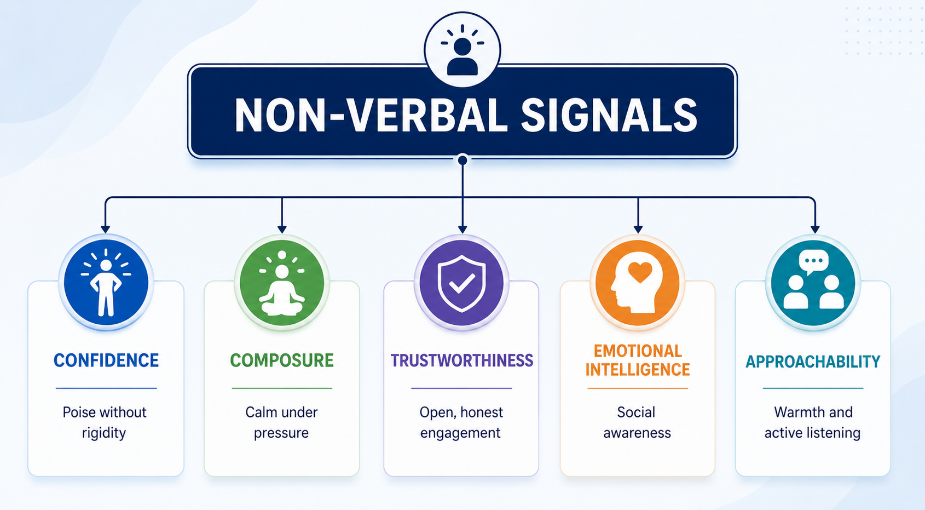
When your verbal and non-verbal signals match, your answers become exponentially more persuasive.
The First 60 Seconds: Anatomy of a First Impression
The evaluation begins the moment you enter the room or your webcam connects. Hiring managers process your presence across six immediate focal points:
-
The Entry & Gait: Walking with purpose vs. shuffling awkwardly.
-
Posture Alignment: Open, tall posture vs. slumped shoulders.
-
The Greeting: Professional handshake (if in-person) or a warm, anchored node (if virtual).
-
Facial Expression: Genuine, relaxed smile vs. a nervous, rigid mask.
-
Eye Contact: Direct, engaging focus vs. darting eyes searching for an exit.
-
Vocal Energy: Controlled, measured greeting vs. rushed, high-pitched speech.
10 Body Language Traps Costing Candidates Job Offers
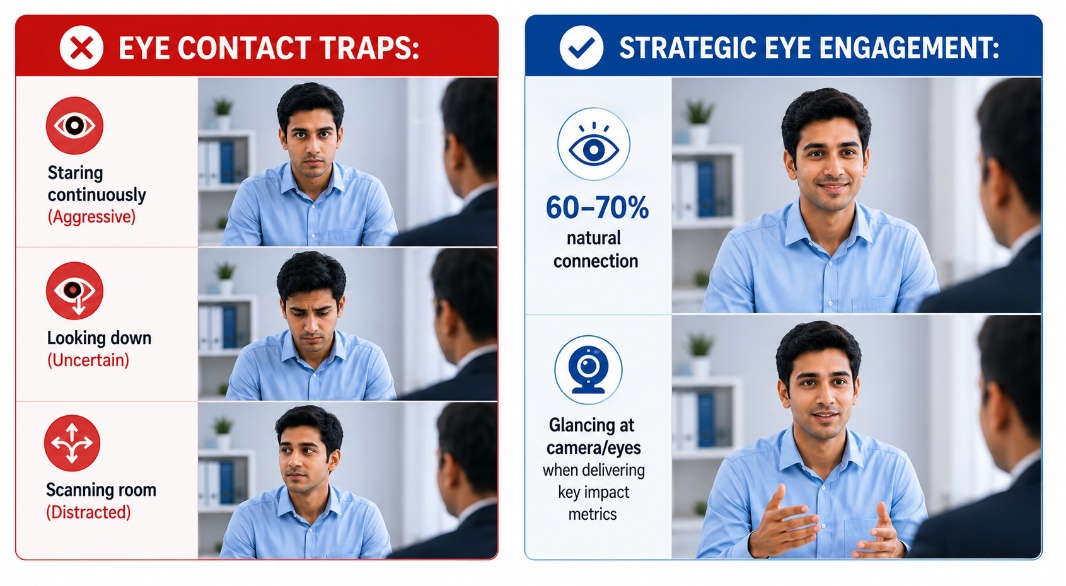
1. Weak or Avoidant Eye Contact
Looking down, looking away, or constantly scanning the floor signals uncertainty or disengagement. Maintain comfortable eye contact while speaking and listening.
2. The Slouch (Poor Posture)
Slouching conveys low energy, lack of authority, or indifference. Sit upright with your shoulders rolled back and relaxed. Good posture projects attentiveness without appearing stiff.
3. Crossed Arms (Defensive Framing)
Folding your arms across your chest builds a physical barrier between you and the recruiter, creating an impression of defensiveness. Keep your posture open with your hands resting comfortably on the table or your lap.
4. Nervous Fidgeting
Clicking pens, tapping feet, swiveling in your chair, or adjusting your collar continuously draws the recruiter's focus away from your answers.
5. The "Flat Face" (Forgetting to Smile)
Under stress, candidates often display an unreadable, stern facial expression. A warm, natural smile during introductions and conversational transitions instantly signals emotional intelligence and high energy.
6. Rushing Your Vocal Delivery
Nervousness accelerates your speaking speed. Slow down deliberately. Pause for one full second before answering key questions. A measured cadence reflects composure and strategic thinking.
7. Eye Wandering
Looking frequently at the door, ceiling, or decorative art signals that your mind is elsewhere. Keep your visual focus anchored directly on the interviewer.
8. Exaggerated Hand Gestures
Natural hand gestures add dynamic warmth to your communication. However, wild, sweeping arm movements become visually chaotic---especially on camera. Keep gestures contained within your torso frame.
9. Passive Listening
Communication isn't just about when you speak. When the recruiter is talking, show active engagement: nod subtly, lean slightly forward, and keep your gaze fixed on them.
10. Breaking Form During the Exit
Many candidates drop their professional posture the moment the final question ends. Maintain your poise, stand tall, offer a warm closing, thank them by name, and exit with the exact same authority you entered with.
In-Person vs. Virtual: Adapting Your Body Language
While the core principles remain identical, the digital format requires subtle technical adjustments:
Physical Interview Virtual / Zoom Interview
Eye Contact: Look directly at the interviewer's eyes/face. Eye Contact: Look directly into the webcam lens during key responses. Framing: Full body/torso visible in real time. Framing: Position yourself chest-up so hand gestures stay in frame. Handshake: Firm, confident 2-second greeting. Digital Greeting: Warm, deliberate head nod accompanied by a clean smile. Posture: Sit on the front half of the chair to avoid slouching. Posture: Elevate camera to eye level so you aren't looking down at the lens.
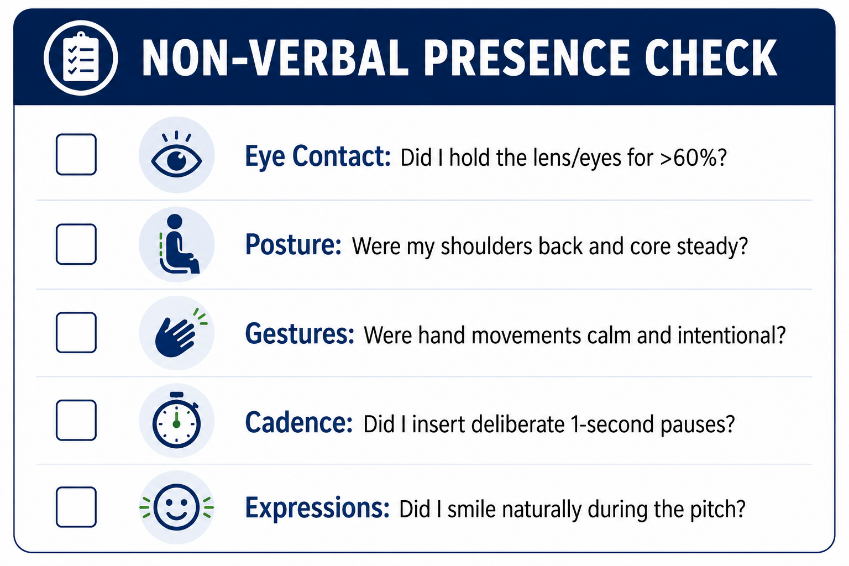
The Curious Career Body Language Self-Audit
Before your next interview, record a 2-minute mock response on your phone and run through this audit:
Final Thoughts: Practice Builds Natural Poise
You cannot fake confident body language by trying to consciously control 20 different muscles during a high-pressure interview. If you are constantly thinking about your hands or posture, you won't be focused on delivering high-impact answers.
True non-verbal poise is a muscle developed through deliberate practice.
When your preparation is thorough and your delivery is rehearsed, your body language naturally reflects what you feel on the inside: ready, capable, and composed.
Ready to Master Your Executive Presence?
Reading body language tips is a start. Seeing how you present under pressure changes everything.
With Curious Career's AI Interview Coach, you can record mock responses, analyze your visual presence, eye contact, vocal pacing, and filler words in real time, and refine your delivery until you exude unshakeable confidence.
Refine Your Presentation with Curious Career Today and make every second count.