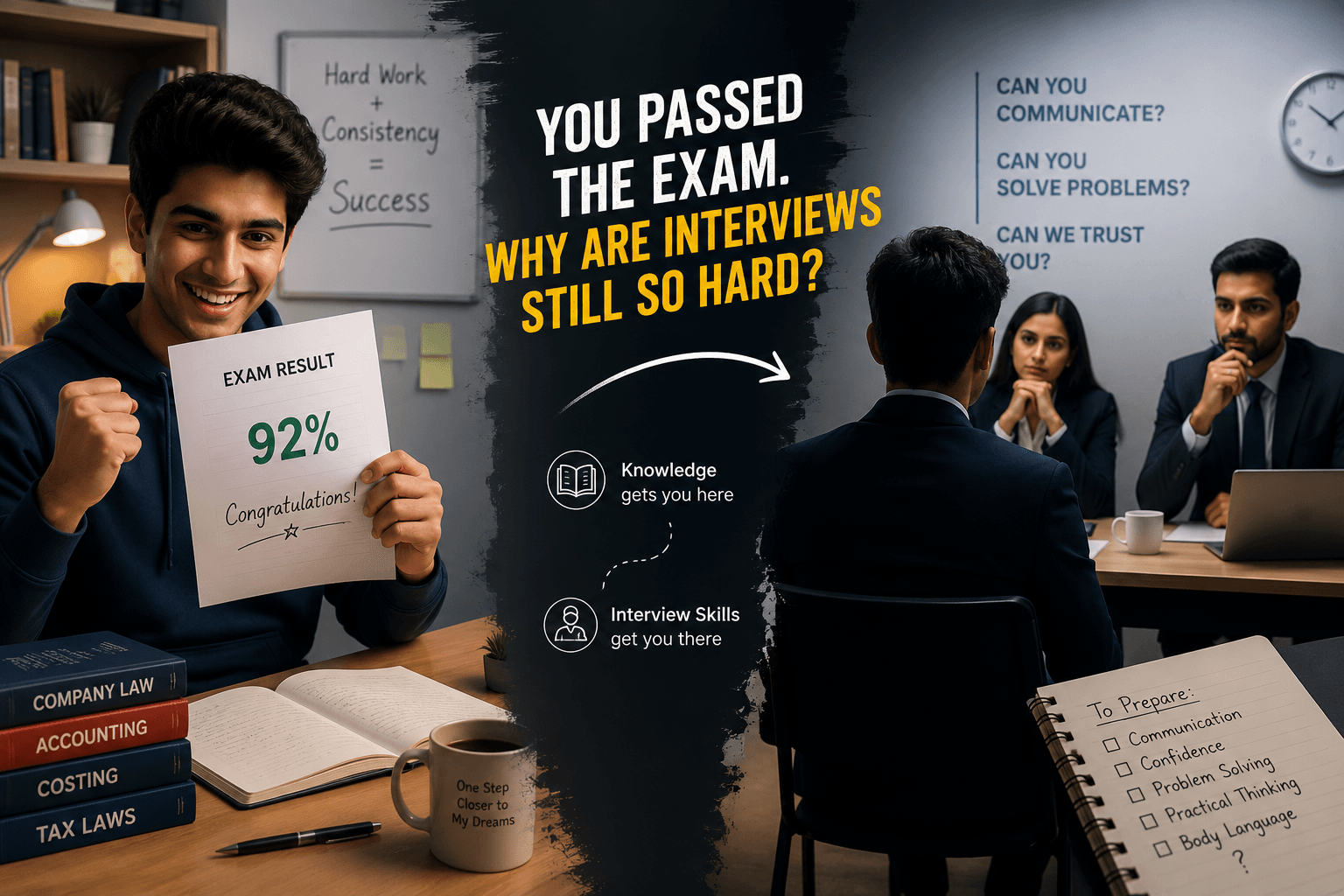
You Passed the Exam. So Why Are Interviews Still So Hard?
Great grades don't guarantee great interviews. Here's why straight-A students often struggle most — and the 5 mistakes costing you job offers.
You Passed the Exam. So Why Are Interviews Still So Hard?
By Curious Career Editorial Team • 6 min read
You spent months---maybe even years---staring at textbooks, highlighting notes, and grinding through practice papers.
When the results came in, you celebrated. You earned the grades. You proved you knew your stuff. Passing felt like crossing the finish line.
Then reality hit.
You polished your resume, hit "apply," and finally scored an interview. You walked in thinking, "I've worked hard for this. I'm ready."
A few days later, the standard auto-generated rejection dropped into your inbox:
"Thank you for your time, but we've decided to move forward with other candidates."
If this has happened to you, take a deep breath: you're not incompetent, and you're certainly not alone.
Every year, thousands of brilliant graduates get stuck in this exact loop. They aren't getting rejected because they lack knowledge---they're getting rejected because nobody ever taught them how to interview.
The Hard Truth About Hiring
Here is the fundamental disconnect keeping great candidates unemployed:
A. Education measures how well you answer questions on paper.
B. Employers hire based on how well you answer them in person.
Those two things require entirely different skill sets.
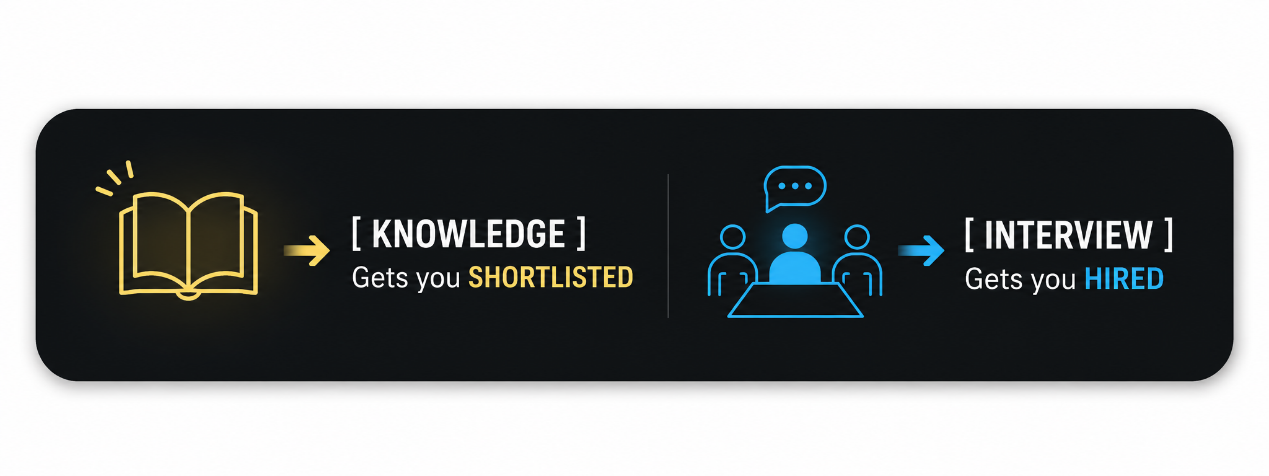
The biggest mistake job seekers make is assuming an interview is just an oral exam. It isn't.
By the time you sit across from a recruiter, your resume has already convinced them you can do the job technically. The interview exists to answer much deeper questions:
-
Can this person communicate complex ideas without getting bogged down?
-
How do they react when they don't know the answer right away?
-
Would I actually enjoy collaborating with them 40 hours a week?
-
Can I trust them in front of a client?
Notice a pattern? Not a single one of those questions can be answered by your test scores.
Why "Straight-A" Students Struggle the Most
Ironically, candidates with top academic records often struggle the most in job interviews.
Why? Because school trains you for a controlled environment with rigid rules. The real world---and the hiring process---is messy, subjective, and dynamic.
Written Exams 📝 Job Interviews 💬
Memorizing core concepts Applying concepts in real time
Writing static, structured Explaining ideas dynamically answers
Solo performance Human-to-human rapport
Seeking the one right answer Navigating multiple valid approaches
Success in a classroom doesn't automatically translate to success in a boardroom. Interviewing is a performance skill---and like any performance, it requires deliberate practice.
5 Critical Mistakes Costing You Job Offers
If you find yourself getting interview callbacks but zero offers, you're likely falling into one of these common traps:
1. Treating the Interview Like a Viva
Recruiters don't want a walking textbook. When asked a technical question, don't try to recite verbatim definitions. Instead, ask yourself: "How would I explain this simple concept to a colleague or client?" Clear, practical communication always beats jargon.
2. Memorizing Scripts Instead of Understanding Concepts
Rehearsed answers sound robotically canned. The moment an interviewer asks a subtle follow-up, scripted candidates freeze. Understanding gives you adaptability; memorization traps you.
3. "Practicing" in Your Head
Reading interview tips silently on your screen feels like preparation, but it isn't. It's like trying to learn how to drive a car by reading the owner's manual. Until you speak your answers out loud, you haven't actually practiced.
4. Panicking Over Behavioral Questions
Questions like "Tell me about a time you failed" or "How do you handle conflict?" make candidates sweat because there's no textbook key. But these soft-skill questions are often the #1 factor in the final hiring decision.
5. Forgetting It's a Conversation
An interview shouldn't feel like an interrogation. It's a two-way dialogue to see if both parties are a good fit. Listen actively, smile, engage naturally, and ask thoughtful questions.
What Recruiters Actually Look For
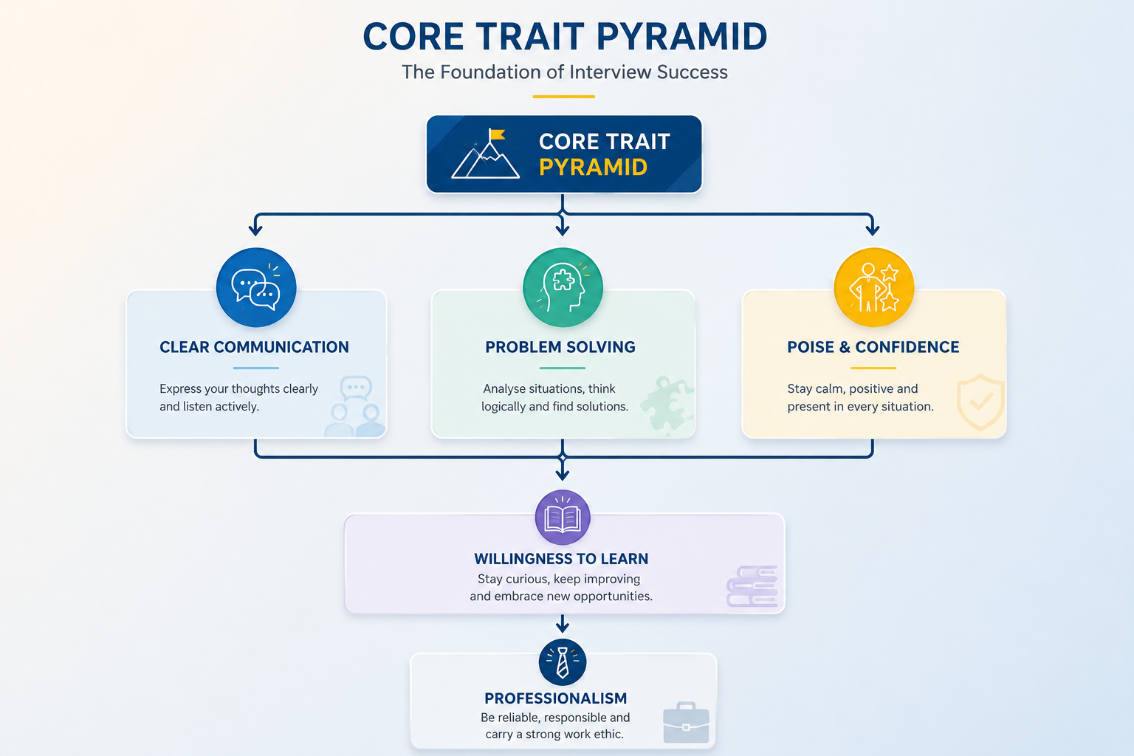
If technical skills are just the entry ticket, what actually wins the job offer? Across almost every industry, hiring managers look for five core traits:
-
Clear Communication: Can you distill complex ideas into simple terms?
-
Problem-Solving Ability: How do you think through an unexpected challenge?
-
Poise & Confidence: Are you grounded without being arrogant?
-
Willingness to Learn: Are you coachable, curious, and open to feedback?
-
Professionalism: Do you respect time, present yourself well, and show up prepared?
How to Overhaul Your Preparation (Starting Today)
Stop re-reading your old lecture notes. It's time to prepare like an athlete preparing for a match:
a) Practice Out Loud: Speak your answers until the delivery feels effortless.
b) Record Yourself: Use your phone camera to catch filler words, nervous habits, or awkward pacing.
c) Do Deep Research: Don't just scan the company website---understand their mission, recent news, and culture.
d) Build a Story Bank: Prepare 4--5 real-life anecdotes (from projects, school, or previous work) that demonstrate your problem-solving abilities.
Final Thoughts: Make Your 30 Minutes Count
Passing an exam proves you've learned the subject.
Cracking an interview proves you can apply it.
Your career doesn't start when you receive your diploma---it starts during your first real conversation with an employer. Don't just show up to answer questions. Show up ready to articulate your value, share your story, and build a connection.
You've already put in the hard work to acquire the knowledge. Now it's time to learn how to showcase it.
Want to Practice Before Your Next Real Interview?
Reading career advice is step one. Active execution is where real breakthroughs happen.
At Curious Career, we built an AI-driven interview coach that lets you simulate realistic interviews, get instant actionable feedback on your communication, and build unshakeable confidence before the high-stakes moment arrives.
Try Curious Career for Free and turn your next interview into a job offer.